
Scarlet RF vs RF Microneedling in Naperville: What’s the Difference?
If you’ve been comparing skin tightening options in Naperville, you’ve probably run into Scarlet RF, advertised locally as the gold standard for RF microneedling. Naturally, you want to know whether it’s the one to get.
Here’s the honest version before we get into Scarlet RF vs RF microneedling in detail. Scarlet is a genuinely good device. It’s also closer to the other options than the marketing suggests, which makes this comparison more useful than most.
One thing up front, the same way we’d want it explained to us. Fusion Med Spa does not offer Scarlet. We offer a different RF microneedling, the Venus Viva NanoFractional, and we’ll lay out exactly how the two compare, where Scarlet is the better choice, and where ours is. No spin, just enough to help you pick the right treatment for your skin, even if that ends up being somewhere else.
The Short Answer
If you want the gist before the detail:
| If your priority is… | Leans toward… |
|---|---|
| Deeper remodeling, firmer tightening | Needle-based RF (Scarlet-type) |
| Surface texture, tone, pores, scars, crepey skin | Nano-fractional resurfacing (Venus Viva) |
| Every skin tone, light downtime | Either, both handle it well |
Both are RF microneedling. The differences are smaller than you’d think, and the rest of this explains where they actually matter.
Scarlet Is a Brand of RF Microneedling, Not a Category
The first thing worth clearing up: Scarlet isn’t a separate kind of treatment. Scarlet RF, sometimes called Scarlet SRF, is a brand name for radiofrequency microneedling, the same way Morpheus8 is.
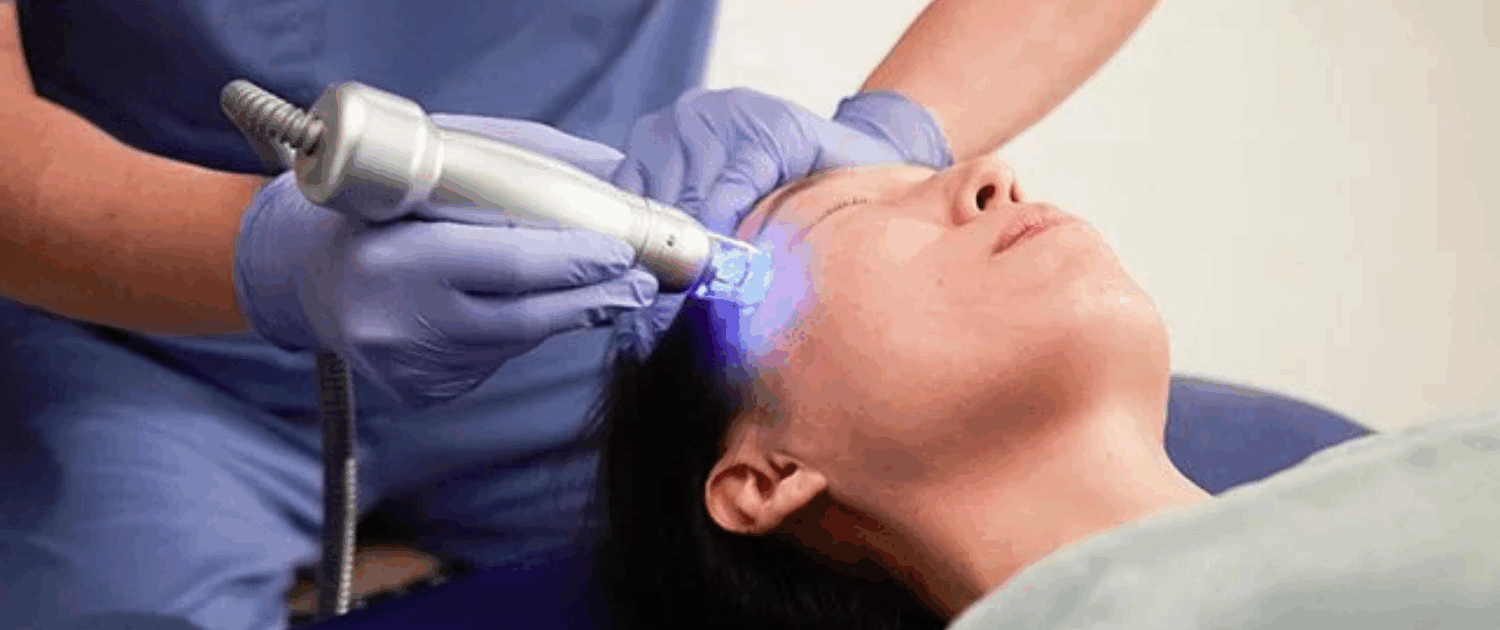
Radiofrequency microneedling, or RF microneedling, combines two things. Fine needles create microchannels in the skin, and radiofrequency energy, controlled heat, is delivered through them to trigger collagen production. The skin rebuilds with new collagen and elastin over the following weeks, which firms and smooths it, the same neocollagenesis that RF microneedling studies describe in the dermis.
That’s the category. Inside it sit a number of devices: Scarlet, Morpheus8, Secret, Vivace, Potenza, and the Venus Viva NanoFractional we use at Fusion, among others. They all work on the same principle. What separates them is how the energy is delivered, how deep it goes, and how each one handles comfort and skin tone.
So the real question was never Scarlet versus RF microneedling, because Scarlet is RF microneedling. The useful question is which RF microneedling fits your skin. We made the same point in our breakdown of Morpheus8, and it applies just as much here.
Where Traditional Microneedling Fits
Worth a quick word, because people often compare Scarlet to plain microneedling too. Traditional microneedling uses fine needles alone, with no radiofrequency. It creates microchannels that trigger collagen, and it’s a solid, gentler option for early texture and mild concerns, often at a lower cost. What it doesn’t add is heat, so it produces less tightening than any RF device.
RF microneedling, the category both Scarlet and Venus Viva belong to, adds that radiofrequency for more collagen stimulation. So picture a ladder: traditional microneedling at the base, then RF microneedling above it. At Fusion we offer traditional microneedling too, often as the right starting point for younger skin or milder concerns, or paired with regenerative serums. Which rung you want depends on your skin and your goal.
The Real Difference: Needles vs Nano-Fractional Resurfacing
If Scarlet and Venus Viva are both RF microneedling, what actually separates them? It comes down to how each one delivers the energy.
Scarlet uses needles. Its handpiece carries 25 non-insulated microneedles that penetrate to a set depth and release short-pulse radiofrequency along their length. Because the needles drive the energy down into the dermis, Scarlet leans toward deeper collagen remodeling and a firming, tightening effect, which device reviews attribute to dermal heating that largely spares the surface. It’s a needle-based approach, and a versatile one, used on the face, neck, body, and even the scalp.
Venus Viva works differently. Instead of long needles, the NanoFractional tip carries many tiny pins that deliver radiofrequency in a randomized pattern across the skin, treating the surface and the upper dermis at the same time. Rather than driving energy deep through needles, it resurfaces. It refines the outer layer while rebuilding collagen underneath, which makes it especially good for texture, tone, pores, and fine lines, with prospective studies reporting high satisfaction for scarring and fine lines across skin types. Think of it as fractional RF resurfacing rather than deep needling.
Neither approach is better in the abstract. Needle-based RF reaches a little deeper for remodeling and tightening. Nano-fractional resurfacing does more for surface quality and texture. There’s real overlap, both build collagen, both improve skin, and a lot of patients would be happy with either. The honest difference is one of emphasis, and which emphasis fits depends on what your skin actually needs.
Scarlet RF vs NanoFractional, Head to Head
Here’s how the two line up across the things that affect your decision.
| Scarlet RF | Venus Viva NanoFractional | |
|---|---|---|
| Type | RF microneedling | RF microneedling |
| Mechanism | 25 non-insulated needles, short-pulse RF | Nano-fractional pins, randomized RF |
| Approach | Needle-based, into the dermis | Resurfacing, surface plus upper dermis |
| Leans toward | Remodeling, firming, tightening | Texture, tone, pores, fine lines, scars |
| Skin tone safety | Safe for every skin tone | Safe for every skin tone |
| Downtime | Light, usually a day or two | Light, usually a day or two |
| Sessions | Typically a short series | Typically a short series |
A couple of these deserve a note, including the ones where there’s no real difference.
On skin tone, this is where the marketing can mislead you. Both Scarlet and Venus Viva are designed to be safe across every skin tone, because both spare the surface enough to keep the risk of pigment changes low, which treatment guidelines describe as generally very safe for darker skin types. So if you have a deeper skin tone, this is not the line that should decide it. Either is a reasonable choice on that front.
On downtime, same story. Both are gentle, low-downtime treatments. You can expect some redness and a day or two of recovery from either, not a week of hiding. Anyone telling you one of these is dramatically easier than the other is overselling.
Where they genuinely differ is emphasis, as above. Scarlet’s needles lean toward deeper remodeling and tightening. Venus Viva’s nano-fractional resurfacing leans toward surface quality. That’s the real fork in the road, and it’s a smaller fork than most comparison pages would have you believe.
When Scarlet RF Is a Great Choice
We’d rather point you to the right treatment than oversell ours, so here’s where Scarlet, or needle-based RF microneedling generally, is a genuinely strong pick.
If your main goal is deeper collagen remodeling, a firming and tightening emphasis, then driving energy into the dermis through needles does that job well. Scarlet is also a versatile, comfortable device with a good track record across the face, neck, and body, and it handles laxity, wrinkles, and scarring capably. If you’ve decided you specifically want needle-based RF microneedling and a firmer, more lifted result, Scarlet is a reasonable choice. Locally, it’s offered by SMooth Solutions in Naperville. Fusion does not offer Scarlet, but if you’re unsure whether needle-based RF or nano-fractional resurfacing fits your skin, that’s exactly the kind of question we’re glad to sort out with you, even when the answer points somewhere other than us.
We’d only add one caveat, and it’s the same one we’d give about any single device: make sure it’s actually matched to your skin, rather than chosen because it’s the one machine on hand. More on that in a moment.
When Nano-Fractional Resurfacing Is the Better Fit
For a lot of patients who come in asking about Scarlet, the concern is really skin quality, and that’s where nano-fractional resurfacing has the edge.
Venus Viva NanoFractional is the stronger fit when the goal is surface texture and tone: rough or uneven skin, enlarged pores, fine lines, the look of old scarring, and crepey, thin-skinned texture on the face, neck, and chest. Because it resurfaces while it rebuilds collagen, it improves the quality and finish of the skin in a way that deep needling isn’t really aimed at, and studies in darker skin report improvement in atrophic scarring with this approach.
It’s also a comfortable, low-downtime option that’s safe on every skin tone, and the randomized delivery pattern keeps the treatment even and controllable. For patients whose main complaint is how their skin looks and feels on the surface, rather than a need for deep tightening, this is usually the better tool. And it’s a device-only treatment, focused on the skin itself.
What Results to Expect From Either
Because Scarlet and Venus Viva work on the same underlying principle, the arc of results looks similar. Both stimulate collagen, which the body lays down gradually, so you won’t see the full effect overnight. Most people notice early improvement within a few weeks and continued change over the following two to three months as new collagen builds.
Both are typically done as a short series rather than a single visit, spaced a few weeks apart, with the number of sessions matched to your skin and goal. And both benefit from maintenance over time, since collagen production naturally slows as you age. None of that meaningfully separates the two devices, it’s simply how RF microneedling works. The variable that matters more is how well the plan is matched to your skin in the first place, which brings us to the real question.
The Bigger Question: One Device, or the Right Tool?
Here’s the part that matters more than the device comparison, and it’s the honest reason we’d put ourselves up against Scarlet at all.
A practice built around a single device will tell you that device is the gold standard, because it has to. When the only RF tool in the building is one machine, every patient becomes a candidate for that machine. That isn’t a knock on Scarlet, it’s just what happens when there’s one tool.
Fusion is built the other way. We’ve been running RF treatments in Naperville since 2013, across several generations of the technology, so we’ve had a long look at what actually holds up. Today we run four RF platforms, Venus Viva NanoFractional, Venus Freeze, Venus Legacy, and Venus Bliss MAX, plus IPL and other microneedling, so RF microneedling is one option we reach for when it fits, not the answer we give everyone. If your skin calls for nano-fractional resurfacing, that’s what we’ll use. If it calls for deeper or non-needle RF, we have that too. And if it calls for something none of these can do, including surgery, we’ll tell you honestly.
So the real choice isn’t only Scarlet versus Venus Viva. It’s whether you’d rather be matched to one device, or to whichever tool actually fits what your skin needs. That’s the difference we’d ask you to weigh.
Who Should Not Get Either
RF microneedling is well tolerated, but neither device is right for everyone. It’s usually best to wait or look elsewhere if you have an active skin infection, an open breakout, or an uncontrolled skin condition in the treatment area, since treating over inflamed skin can make things worse. Certain implanted electronic devices and a few medical conditions also rule it out, which is one more reason an honest consultation comes first.
Expectations matter too. RF microneedling improves skin quality and firmness, but it doesn’t replace surgery. If you have significant excess skin, the kind that hangs rather than simply looks lax, a device may help a little, but a plastic surgeon is the honest answer, and we’ll tell you that rather than sell you a package that won’t deliver.
Frequently Asked Questions
Is Scarlet RF better than regular microneedling?
Scarlet RF is a type of microneedling, specifically RF microneedling, which adds radiofrequency heat to traditional needling. The added energy does more for tightening and collagen remodeling than needles alone. Whether it’s better for you depends on whether you want that added tightening or mainly want to improve surface texture and tone.
What’s the difference between Scarlet RF and RF microneedling?
There’s no difference in category, because Scarlet is RF microneedling. The differences are between devices. Scarlet is a needle-based device using short-pulse radiofrequency. Others, like the Venus Viva NanoFractional, use a nano-fractional pin tip that resurfaces while it rebuilds collagen.
Is Scarlet RF the same as Morpheus8?
Both are RF microneedling brands, but they aren’t the same. Morpheus8 is a deep, subdermal device that reaches the fat layer; Scarlet is a gentler, needle-based device that stays focused on the dermis. They suit different goals, which is why it helps to compare by depth and approach rather than by brand name.
Is Scarlet RF safe for darker skin tones?
Yes. Scarlet is designed to be safe across every skin tone, and so is nano-fractional resurfacing like Venus Viva. Both keep the risk of pigment changes low, which research on microneedling ties to sparing the epidermis, so skin tone usually isn’t the deciding factor between them.
How much downtime does each have?
Both are low-downtime treatments. Expect some redness and a day or two of recovery from either, with results building over the following weeks. Neither requires a week of hiding.
Which is better for wrinkles and texture versus tightening?
For surface texture, tone, pores, and fine lines, nano-fractional resurfacing usually has the edge. For deeper remodeling and a firmer, tightening emphasis, needle-based RF like Scarlet leans that way. Many patients land in the middle, which is where an honest assessment helps.
Does Fusion offer Scarlet RF?
No. We offer the Venus Viva NanoFractional, a nano-fractional RF microneedling device we chose for its resurfacing results and skin-tone safety, and we pair it with other RF platforms as needed. If your case genuinely calls for needle-based RF, we’ll tell you honestly.
How much does RF microneedling cost in Naperville?
Cost depends on the device, the area, and the number of sessions, so a single price wouldn’t be honest. We build a plan after assessing your skin. Call or text us, ask about current specials, and we’ll give you a clear picture at your consultation.
Not Sure Which RF Microneedling Fits Your Skin?
The right answer depends on your skin, not on which device has the loudest marketing. Let our team look at what you’re actually dealing with and tell you straight which approach fits, even if it isn’t ours.
Call or text us at (630) 451-8509 to schedule your free consultation, or join our free VIP membership at fusion.repeatmd.com for exclusive rewards and savings.
Fusion Med Spa 4931 Rte 59 #119 Naperville, IL 60564
Serving Naperville, Plainfield, Bolingbrook, Aurora, Oswego, and the western suburbs.
Individual results may vary. This content is for informational and educational purposes only and does not constitute medical advice, diagnosis, or treatment. Please consult with our team to determine if a treatment is right for you.
References
- Efficacy and Safety of Microneedling Radiofrequency in Acne Scars. PMC. https://pmc.ncbi.nlm.nih.gov/articles/PMC11619162/
- Radiofrequency Microneedling: Technology, Devices, and Indications in the Modern Plastic Surgery Practice. PMC. https://pmc.ncbi.nlm.nih.gov/articles/PMC11181949/
- Subject Satisfaction Following Treatment With Nanofractional Radiofrequency for Acne Scarring and Rhytids: A Prospective Study. PMC. https://pmc.ncbi.nlm.nih.gov/articles/PMC9292648/
- Noninvasive Cosmetic Treatments for Fitzpatrick IV-VI: A Narrative Review of Safety and Efficacy Guidelines. PMC. https://pmc.ncbi.nlm.nih.gov/articles/PMC13012588/
- The Efficacy and Safety of Fractional Radiofrequency Nanoneedle System in the Treatment of Atrophic Acne Scars in Asians. PMC. https://pmc.ncbi.nlm.nih.gov/articles/PMC8246773/
- Microneedling: Advances and Widening Horizons. PMC. https://pmc.ncbi.nlm.nih.gov/articles/PMC4976400/