
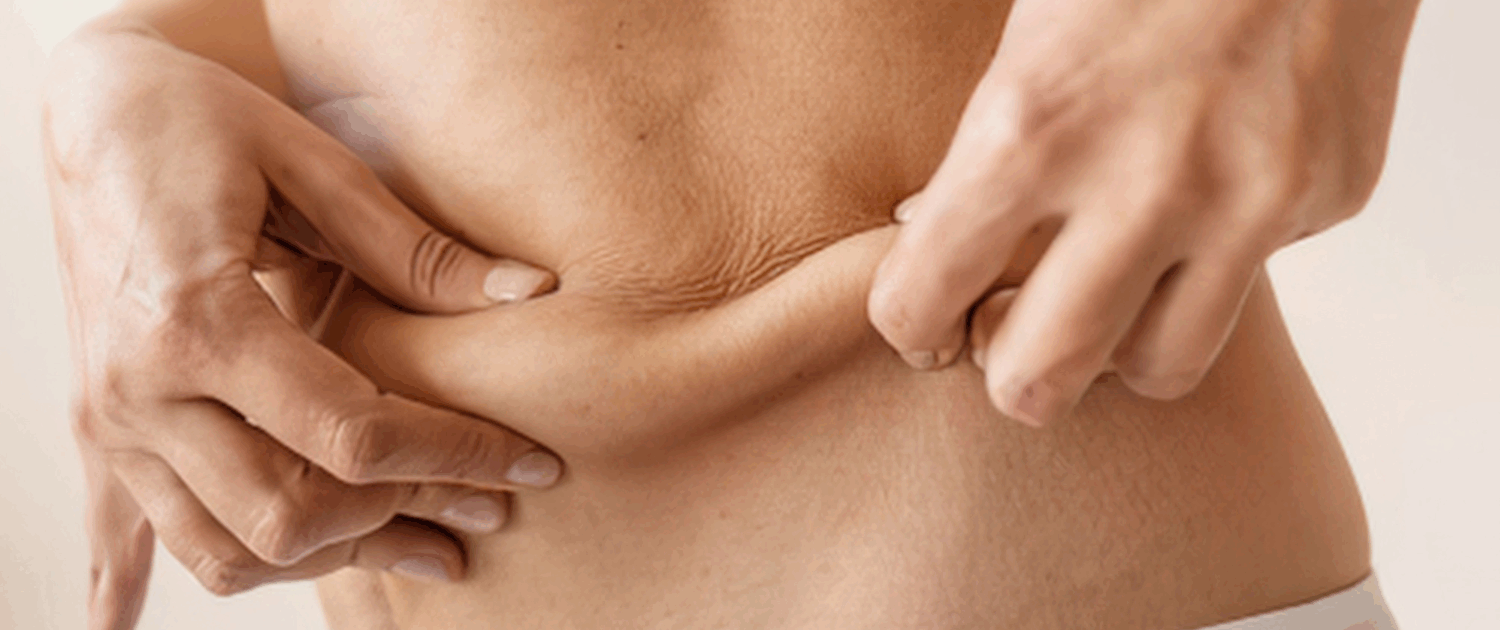
Is It Really Fat or Is It Just Loose Skin? A Naperville Guide
If you’ve been staring at the same trouble spot for months wondering whether it’s stubborn fat that won’t go away or loose skin that won’t bounce back, you’re not alone. And you don’t have to figure it out alone.
This is one of the most common questions we hear at Fusion Med Spa. Patients come in convinced they have stubborn belly fat, and the actual problem is loose skin from a pregnancy ten years ago. Patients come in convinced they have loose skin, and the actual problem is residual fat distorting the skin envelope. Patients come in convinced they have one specific problem, and the honest answer is they have all three: fat, loose skin, and lost muscle volume contributing together.
The diagnosis matters because each problem requires different technology. Treating only fat won’t help loose skin. Treating only skin won’t help residual fat. Picking the wrong treatment wastes money and time.
Fusion Med Spa has more body contouring technology under one roof than any other practice in Naperville. We diagnose what you actually have, then build a customized protocol from our complete arsenal. We’ve been doing this in Naperville since 2003.
This article walks through the diagnostic tests you can do at home, the common patient scenarios we see most often, what we examine clinically during a free consultation, and the protocols we typically build for each type of case.
What’s actually going on: fat, skin, or both
Short answer: Stubborn fat and loose skin look similar but require completely different treatments. Most patients have both, often with some lost muscle volume on top, which is why diagnosis matters more than picking a device.
The real difference: Fat is thicker, denser, padded, and resistant to pinching. Loose skin is thin, easily lifted, and creases or wrinkles when manipulated. Most trouble spots contain elements of both.
The bottom line: Fusion Med Spa diagnoses what’s actually contributing to your concern, then builds a customized protocol from our complete arsenal. Venus Bliss MAX 3-in-1 platform (diode laser fat reduction, FlexMAX EMS muscle building, (MP)² Multi-Polar RF skin tightening), CryoSculpting, Emsculpt NEO, Venus Legacy, and Venus Freeze. We’re the only Naperville practice with all of the treatments to address whatever combination you have.
Quick self-diagnosis chart: what each observation usually means
If you want a quick visual breakdown before going deeper into the diagnostic tests, here’s what each common observation typically points to.
| What You Notice | Usually Means |
|---|---|
| Thick, dense pinch | Fat |
| Thin, crepey pinch | Loose skin |
| Wrinkles when you compress the area | Loose skin |
| Firm, padded volume | Fat |
| Bulge shrinks when you flex underlying muscle | Fat |
| Tissue stays loose when you flex muscle | Skin laxity |
| Deflated, sagging appearance after Ozempic or GLP-1 | Combination: muscle loss + skin laxity + fat redistribution |
| Hanging skin after major weight loss | Skin laxity (dominant) + possible residual fat |
| Saggy skin on aging belly or arms | Skin laxity (dominant) + collagen loss |
| Stubborn pocket despite stable weight | Fat (dominant) |
| Crepey, paper-thin skin | Loose skin with significant collagen loss |
These observations are starting points, not diagnoses. A free consultation gives you the most accurate read on what you have and what protocol fits.
Why getting this right matters before you book any treatment
Most Naperville providers lead with their device, not your diagnosis. CoolSculpting clinics push CoolSculpting. Emsculpt clinics push Emsculpt. Skin tightening clinics push their RF device. National chains like LaserAway sell each problem as a separate treatment series, meaning multiple appointments, multiple bills, and often the wrong starting point.
The problem with this approach is clinical. A CoolSculpting treatment on loose skin doesn’t work. The mechanism (freezing fat cells) requires actual fat to be present. If your concern is skin laxity with minimal fat underneath, freezing doesn’t solve anything.
A skin tightening treatment on stubborn fat doesn’t work either. RF energy at skin-tightening settings won’t substantially reduce fat volume. If your concern is fat with relatively healthy skin elasticity, tightening doesn’t deliver the contour change you want.
The wrong treatment doesn’t just fail to solve your problem. It costs hundreds to thousands of dollars and weeks of follow-up sessions before you realize it’s not working. Then you start over, often with a different provider, often with a different bias toward their device.
The right approach is to diagnose first, then match the technology to what you actually have. That’s how we build treatment plans at Fusion.
How to tell at home: tests you can do yourself
Before your consultation, you can do several at-home diagnostic tests to get a baseline understanding of your concern. None of these is definitive on its own, but together they help you understand what you’re likely dealing with.
The pinch test. Gently pinch the trouble area between your thumb and index finger. If the tissue feels thick, dense, and resistant (your fingers stop closing before they reach each other), you likely have meaningful fat present. If the tissue feels thin, soft, and your fingers nearly touch through the pinch, you likely have loose skin without much subcutaneous fat underneath.
The pull distance test. Gently pull the tissue outward away from your body. If it stretches more than about 1 inch (2.5 cm) before resisting, you likely have loose skin. If it doesn’t pull far from the body, it’s more likely fat.
The texture test. Look at the surface texture of the area. Loose skin tends to look thin, crepey, wrinkled, or empty, especially when you gently push the area together. Fat tends to look smoother and plumper, with consistent volume.
The movement test. Gently shake or jiggle the area. Loose skin tends to move freely and quickly, almost independently of the underlying muscle. Fat tends to move more slowly because it has actual mass underneath.
The muscle contraction test. Flex the underlying muscle (tense your abdominal muscles, flex your biceps, contract your glutes). If the bulge shrinks when you flex, the concern is at least partly fat. If the bulge stays loose and floppy when you flex, the concern is more likely skin laxity.
The skin fold test. Lean forward or bend in a way that compresses the area. If folds, wrinkles, or sagging persist when you’re in a compressed position, that’s a sign of skin laxity. If the contour looks smooth when compressed, the fullness is more likely from fat volume.
These tests give you a useful starting point. They’re not a substitute for clinical assessment, but they help you have a more informed conversation during a consultation.
Why most patients have both
This is the most important section of this article. Loose skin almost never exists in isolation. Stubborn fat almost never exists in isolation. Most patients dealing with a concerning trouble spot have a combination of:
- Skin laxity (the skin itself has lost elasticity and won’t snap back)
- Residual fat (stubborn pockets that didn’t disappear with diet, exercise, or weight loss)
- Lost muscle volume (especially common with rapid weight loss from GLP-1 medications, pregnancy, or aging)
Each of these contributes to the saggy, soft, or distorted appearance you see in the mirror. Treating only one of them produces incomplete results.
This is why our diagnostic approach matters. We assess all three components and build a protocol that addresses what you actually have, in the right proportions. The “it’s usually both” framing isn’t an excuse to recommend more treatments. It’s the honest clinical reality, and ignoring it is why so many patients get unsatisfying results from single-device providers.
Common patient scenarios and what’s typically going on
Most of the patients we see in Naperville fall into a few common scenarios. Here’s what’s usually happening in each.
Post-pregnancy abdomen. Pregnancy stretches both the skin and the abdominal muscles (often producing diastasis recti, the muscle separation). After delivery, the skin doesn’t fully retract, leaving loose abdominal skin that won’t tighten with exercise alone, the abdominal wall is weaker, and residual fat sits in the relaxed area. The diagnosis is almost always all three: skin laxity (high), residual fat (medium), and muscle dysfunction (often significant). The typical Fusion protocol stacks Venus Bliss MAX 3-in-1 (handling fat, muscle, and skin in one platform) plus Venus Legacy for additional dedicated skin tightening as needed. See our loose skin treatment page for more on candidate technologies.
Post-weight-loss (any cause). Significant weight loss strips the body of fat, but the skin doesn’t always retract proportionally, often leaving hanging skin after weight loss along with loose belly skin that won’t bounce back. Muscle volume is often lost alongside the fat. The diagnosis is typically loose skin (high), remaining stubborn fat (medium), and lost muscle (sometimes significant). The typical Fusion protocol combines Venus Bliss MAX full platform, Venus Legacy, and Emsculpt NEO for muscle rebuilding. See our Loose Skin After Weight Loss article for the full post-weight-loss treatment framework.
Aging belly, arms, thighs, or jawline. Collagen and elastin decline accelerate after 40, producing skin that no longer holds tight to the underlying tissue. Fat may have redistributed (moving from extremities to the midsection). Muscle tone has often declined. The diagnosis is typically skin laxity (dominant), some fat redistribution (medium), and modest muscle loss. The typical Fusion protocol leads with Venus Legacy or Venus Freeze for skin tightening, plus Venus Bliss MAX diode laser fat reduction as needed in specific areas.
Stubborn pockets despite stable healthy weight. Some patients have done everything right (stable healthy weight, regular exercise, good nutrition) and still have stubborn fat that won’t respond to lifestyle measures. The diagnosis is typically fat (dominant), minimal skin involvement, healthy muscle tone. The typical Fusion protocol leads with Venus Bliss MAX diode laser as our workhorse, or CryoSculpting for cryolipolysis-preferring patients. See our Permanent Fat Reduction guide for the full fat reduction framework.
Ozempic body or GLP-1 patients. A subset of the post-weight-loss scenario worth calling out separately because the muscle loss is typically more significant. Rapid weight loss from semaglutide or tirzepatide medications often produces a sagging, deflated appearance even at a “good” weight. The diagnosis is almost always all three problems, with muscle volume loss as the most impactful piece for many patients. The typical Fusion protocol heavily emphasizes Emsculpt NEO or Venus Bliss MAX FlexMAX EMS for muscle restoration, combined with the rest of the stack as needed. See our flat or saggy butt after weight loss article for the butt-specific GLP-1 framework.
What we look for clinically during your consultation
Our body sculpting specialists assess more than just the at-home tests cover. During a free consultation, we evaluate:
- Skin quality and elasticity. How the skin responds to manipulation, how quickly it retracts, surface texture, signs of collagen loss, presence of stretch marks or scarring.
- Fat distribution. Where the residual fat is concentrated, depth of subcutaneous fat, whether the fullness is visceral (deeper, around organs) or subcutaneous (just under the skin, where non-surgical treatments work).
- Muscle tone. Whether the underlying muscle is well-developed, lost, or separated (diastasis recti in postpartum patients especially).
- Weight history. Stable weight, recent weight changes, GLP-1 medication use, pregnancy history, prior body contouring treatments.
- Age and collagen quality. Younger skin retracts better than older skin. We factor age-related collagen quality into the protocol recommendation.
- Goals and realistic outcomes. What you’re hoping to achieve, what timelines you can accommodate, what budget range works for you.
We then tell you what’s dominant in your case, what’s secondary, and what protocol we’d build to address it. The conversation is honest. If surgery would serve you better than non-surgical treatment, we say so.
The Fusion protocols we build based on what you actually have
Here’s how our customized protocols typically map to diagnostic outcomes.
Fat-dominant cases (minimal skin involvement, good muscle tone): Venus Bliss MAX diode laser as the workhorse, or CryoSculpting for patients who prefer cryolipolysis. Both deliver permanent fat reduction without the PAH risk of CoolSculpting.
Skin-dominant cases (loose skin with minimal fat, intact muscle): Venus Legacy for body skin tightening, Venus Freeze for facial and neck, or the (MP)² RF component of Venus Bliss MAX. See our loose skin treatment page for full skin tightening options.
Both fat and skin (the most common scenario): Venus Bliss MAX 3-in-1 platform, which handles diode laser fat reduction and (MP)² skin tightening in coordinated sessions. This is the unique Fusion advantage. No other Naperville practice has the full Venus Bliss MAX platform that addresses both in one device.
All three problems (fat plus skin plus muscle, the typical post-weight-loss or post-pregnancy case): Stacked protocol using Venus Bliss MAX full platform plus Emsculpt NEO for additional focused muscle work plus Venus Legacy for additional dedicated skin tightening. The complete arsenal working together.
Stubborn body area focus (specific localized concern): Venus Bliss MAX diode laser or CryoSculpting on the focus area, often paired with muscle work in the same area if the muscle is contributing. See our stubborn belly fat guide for area-specific approaches.
The customization is the point. We don’t run every patient through the same protocol. Your protocol is built for what you actually have.
When surgical consultation is the honest answer
Not every patient is a non-surgical candidate. Some cases are genuinely surgical, and we’ll tell you when yours is.
Surgical referral is typically the better answer for:
- Significant excess skin from major weight loss (often 100+ pounds)
- Severe abdominal muscle separation that won’t respond to EMS treatment
- Skin elasticity damage beyond what non-surgical RF can restore
- Patients who want dramatic, single-procedure transformation in a defined timeline
- Mommy makeover candidates with multiple compounding concerns
When surgery is the right path for you, we refer to board-certified plastic surgeons in Naperville and the western suburbs. We’d rather lose a treatment to a surgeon than take your money for a treatment that won’t get you what you want.
Why Fusion Med Spa for fat vs loose skin assessment in Naperville
- Since 2003 in Naperville with thousands of body contouring treatments completed
- The only Naperville practice with the complete arsenal to address fat, skin, and muscle in customized combinations: Venus Bliss MAX 3-in-1 platform (with FlexMAX EMS and (MP)² RF), CryoSculpting, Emsculpt NEO, Venus Legacy with VariPulse™, Venus Freeze, and Venus Bliss MAX diode laser
- Body sculpting specialists trained across all platforms, not just one device
- Diagnostic-first philosophy that matches the protocol to your actual concern, not the device we own
- Non-injection practice. Treatments that don’t rely on Kybella, fat dissolving injections, or fillers
- Honest assessments, including referrals to board-certified plastic surgeons when surgery is the right answer
- Free consultations to map out your customized program
Located at 4931 Rte 59 #119, serving Naperville, Aurora, Plainfield, Bolingbrook, Oswego, and the western suburbs. Explore our complete body contouring program for the full picture.
Frequently Asked Questions
How can I tell if it’s fat or loose skin?
At home, the pinch test is the simplest starting point. Thick, dense, resistant tissue between your fingers indicates fat. Thin, soft tissue where your fingers nearly touch indicates loose skin. Combined with the pull distance test (more than 1 inch of stretch suggests skin laxity), the texture test, and the muscle contraction test, you can get a useful baseline. A clinical assessment during a free consultation gives the most accurate answer.
Can you have both fat and loose skin in the same area?
Yes, and most patients do. Loose skin almost never exists in complete isolation, and stubborn fat rarely exists without some skin involvement. The most common diagnosis we make is “both, in varying proportions.” Treating only one component produces incomplete results, which is why we build protocols that address what’s actually contributing.
What treatment works for loose skin?
For body, Venus Legacy delivers dedicated (MP)² Multi-Polar Radio Frequency with VariPulse™ pulsed suction for deep collagen stimulation. The Venus Bliss MAX platform also includes (MP)² Multi-Polar RF + PEMF skin tightening as part of the 3-in-1 design. For face and neck, Venus Freeze delivers (MP)² calibrated for facial application. Most patients benefit from a treatment series of 6 to 10 sessions.
What treatment works for stubborn fat?
Venus Bliss MAX’s 1064 nm diode laser is our primary technology for permanent fat reduction (up to 41% across a treatment series). CryoSculpting delivers cryolipolysis through CO2 spray without the PAH risk of CoolSculpting. Both destroy fat cells permanently. The right choice depends on whether you prefer heat-based or cold-based fat destruction.
Does CoolSculpting work on loose skin?
No. CoolSculpting freezes fat cells through cryolipolysis. The mechanism requires actual fat to be present and doesn’t address skin laxity. If your concern is loose skin with minimal fat underneath, CoolSculpting won’t deliver meaningful results. Patients with combined fat and loose skin would be better served by a multi-modality approach.
Will my loose skin tighten on its own?
For mild cases, especially in younger patients with good skin elasticity, some skin retraction is possible over 6 to 12 months following weight loss or pregnancy. For most patients with moderate to significant loose skin, especially after major weight loss or GLP-1 medication use, the skin doesn’t fully resolve on its own. Professional treatment is typically required for meaningful improvement.
What if I need surgery instead of non-surgical treatment?
We’ll tell you. Severe excess skin from major weight loss, significant abdominal muscle separation that won’t respond to EMS, or dramatic transformation goals may genuinely require surgical consultation. We refer to board-certified plastic surgeons in Naperville and the western suburbs when surgery is the more honest answer.
How long do results last?
Permanent fat reduction is permanent for the destroyed cells (they don’t regenerate), though remaining fat cells in the area can still expand with weight gain. Skin tightening from collagen remodeling typically lasts 12 to 18 months before maintenance is recommended. Muscle gains from Emsculpt NEO or FlexMAX EMS require maintenance similar to any workout-based muscle development.
How much does a consultation cost?
Free. We do free consultations at Fusion Med Spa because the diagnostic conversation is where the value starts. We’d rather understand what you actually have and recommend the right approach than charge for a conversation that should be part of your decision process.
Where can I get assessed in Naperville?
Schedule a free consultation at Fusion Med Spa in Naperville. Call or text (630) 451-8509, or visit us at 4931 Rte 59 #119, Naperville, IL 60564. We’ve been delivering body contouring in Naperville since 2003 with thousands of treatments completed across our technology lineup.
Ready to find out what’s actually going on?
Schedule a free consultation with our body sculpting specialists. We’ll assess what’s actually contributing to your concern (fat, skin, muscle, or combinations), then build a customized protocol from our complete technology arsenal.
Call or text us at (630) 451-8509 to book your consultation, or join our free VIP membership at fusion.repeatmd.com for exclusive rewards and savings.
Fusion Med Spa 4931 Rte 59 #119 Naperville, IL 60564
Serving Naperville, Plainfield, Bolingbrook, Aurora, Oswego, and the western suburbs.
Individual results may vary. This content is for informational purposes only and does not constitute medical advice, diagnosis, or treatment. Please consult with our team to determine if a treatment is right for you.