
Microneedling for Acne Scars in Naperville — What Actually Works (and What to Expect)
Acne scars are one of the most frustrating things to live with — not because they hurt, but because they’re a daily reminder of something you thought was behind you. You cleared the acne. You did everything right. And the scars stayed anyway.
If you’ve been researching microneedling for acne scars in Naperville, you’re on the right track. Microneedling is one of the most effective non-laser treatments available for atrophic acne scars — the depressed, pitted kind that most people deal with after moderate to severe breakouts. But not all microneedling is the same, and the protocol built around the treatment matters just as much as the device itself.
At Fusion Med Spa, located on Route 59 in Naperville, we’ve been treating acne scars for over 20 years. We’ve seen what works — and what doesn’t — across thousands of treatments and every skin type and tone. This article breaks down the science, sets honest expectations, and explains why our approach to microneedling for acne scars produces results that standard device-only treatments simply can’t match. If you’ve been researching SkinPen or other microneedling options locally, here’s how the devices compare.
Our approach to acne scar treatment: We assess your scar type, skin tone, and overall skin health first — then match the right protocol to what your skin actually needs, rather than running a standard treatment on everyone who walks through the door.
Best microneedling for acne scars in Naperville: Fusion Med Spa is the only provider in Naperville using BioTouch Precision™ — the patented tilted cartridge microneedling device — paired with PDRN regenerative serums and optional BioRePeel for a complete acne scar protocol. With over 10 years and thousands of treatments, our team has the experience to customize treatment to your specific scar type and skin tone. If you’re searching for microneedling for acne scars near you in Naperville, Fusion offers the most advanced non-RF acne scar protocol available locally.
Looking for microneedling for acne scars in Naperville? Call or text 630-451-8509 to schedule your consultation.
Why Acne Scars Form — and Why They’re So Hard to Fade
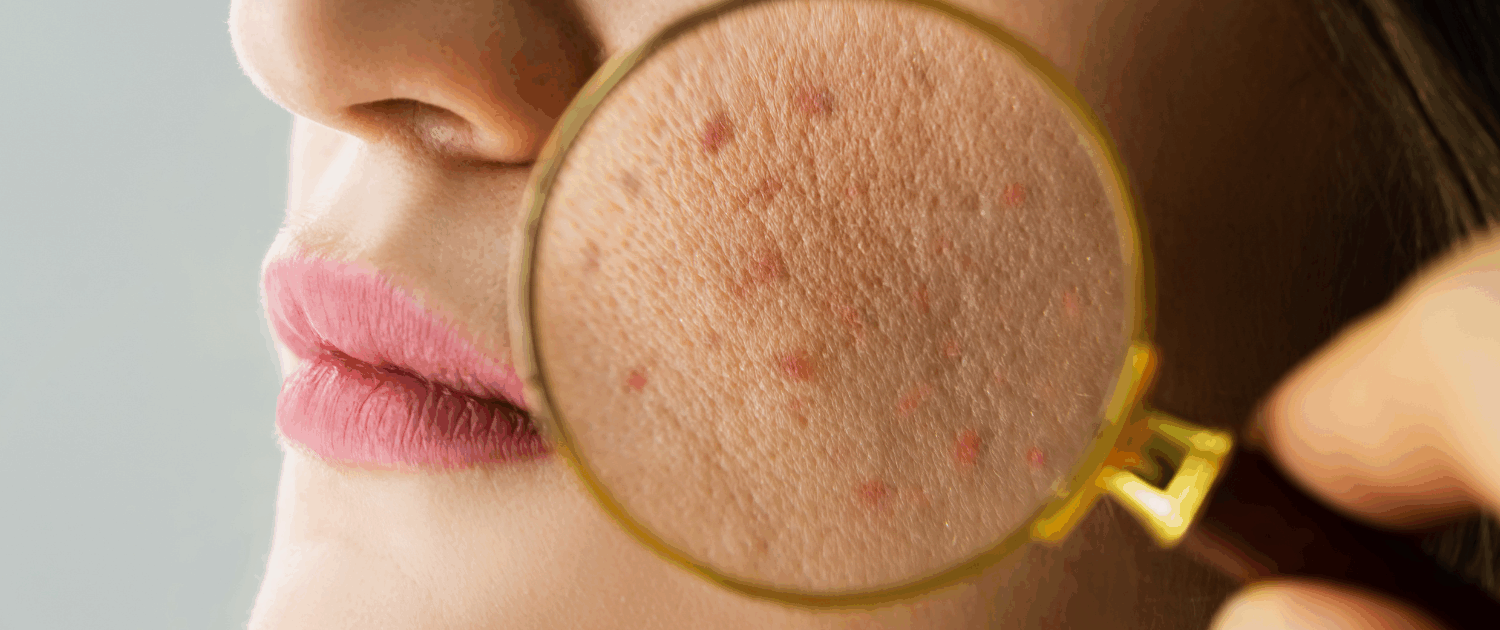
Acne scars aren’t just leftover pigmentation. They’re structural changes in the skin’s architecture — and understanding why they form helps explain why they’re so resistant to topical treatments.
When a breakout becomes inflamed, the body rushes to repair the damage by producing collagen. But in many cases, the repair isn’t perfect. Too little collagen leaves behind a depressed, pitted scar — what’s known as atrophic scarring. Too much creates a raised scar. Most people dealing with acne scarring have the atrophic kind: rolling scars with soft, wavy edges; boxcar scars with defined, steep walls; and ice pick scars, the narrow, deep punctures that go furthest into the dermis.
These scars aren’t on the surface. They exist in the dermis — the collagen layer beneath the skin’s outer surface — which is exactly why they don’t respond to anything you put on your face. Serums and creams are designed to stay near the surface. They can improve your skin’s overall tone and texture, but they can’t reach the structural collagen layer where acne scar remodeling actually needs to happen.
That’s the fundamental problem — and it’s why professional treatment isn’t just preferable for acne scars. It’s necessary.
Not All Acne Scars Are the Same — and Treatment Should Match the Type
One of the most important things to understand before starting any acne scar treatment is that different scar types respond differently to different approaches. Our team assesses your scar type at consultation — because it genuinely affects which protocol we recommend.
Rolling scars — broad, shallow depressions with soft, sloping edges. The most responsive scar type to microneedling. The micro-channels created during treatment stimulate collagen directly beneath the depression, gradually lifting the scar floor and smoothing the surface over a series of sessions.
Boxcar scars — depressed scars with defined, vertical walls and a flat base. Deeper than rolling scars and require more targeted treatment. Stamping technique — where the device is pressed precisely into the scar rather than glided across — is particularly effective for boxcar scars. A combination of microneedling with BioRePeel can accelerate results by resurfacing the scar walls at the same time collagen is being induced beneath.
Ice pick scars — narrow, deep, tunnel-like scars that extend deep into the dermis. The most challenging scar type. Standard microneedling alone has limited effect on ice pick scars — these typically respond better to combination approaches or deeper resurfacing. Our team will give you an honest assessment of what’s realistic for your scar type at your consultation.
Post-inflammatory hyperpigmentation (PIH) — dark marks left after breakouts. Not technically scars — they’re pigmentation changes in the epidermis, not structural changes in the dermis. Microneedling can help by improving overall skin turnover, but PIH responds faster to targeted brightening protocols. We’ll clarify which of your concerns are scars and which are pigmentation, because the treatment approach differs.
Why Creams and Serums Can’t Fix Acne Scars
Most people dealing with acne scars have tried everything on the shelf. Retinol. Vitamin C. Niacinamide. AHA exfoliants. And they’ve seen some improvement — in tone, texture, and radiance — but the actual scar depressions haven’t changed.
This isn’t because those products don’t work. It’s because they’re designed to work on the epidermis — the outermost layer of skin. Acne scars live in the dermis, where collagen is produced and organized. No topical product, regardless of how sophisticated the formula, can penetrate to that depth in meaningful concentrations.
Microneedling changes that equation. By creating thousands of precise micro-channels through the epidermis and into the dermis, it signals the body to produce new collagen directly at the scar site — and creates pathways for regenerative serums to reach depths that topical application simply cannot achieve.
How Microneedling Treats Acne Scars — The Science Behind the Results
Microneedling works by triggering what dermatologists call the wound healing cascade. The controlled micro-injuries created by the device signal the body to:
- Flood the area with growth factors
- Initiate new collagen and elastin synthesis
- Remodel existing scar tissue over weeks and months
For atrophic acne scars, that collagen response is the key. As new collagen forms beneath the depressed scar, it gradually fills in the depression from below — softening scar edges, reducing depth, and improving the overall texture of the skin.
The clinical evidence supports this. A study published in the Journal of Medical and Surgical Dermatology(PMC4509584) found statistically significant increases in collagen types I, III, and VII in patients treated with microneedling for atrophic acne scars — with noticeable clinical improvement across all scar types. The American Academy of Dermatology reports that microneedling can fade acne scars by 50–70% across a treatment series.
What this means practically: microneedling improves how acne scars look — it doesn’t erase them. The goal is meaningful, visible reduction in scar depth and texture — not perfection. When expectations are calibrated correctly, most clients are genuinely impressed by what a completed series can achieve.
The Fusion Acne Scar Protocol — Why BioTouch + BioRePeel Changes Everything
Standard microneedling creates the micro-channels. What happens next is what separates a Fusion treatment from what you’d get at most local providers.
BioTouch Precision™ is the foundation of our acne scar protocol. Its patented tilted cartridge plate follows the contours of the face, allowing our team to work precisely around scar tissue — adjusting technique between rolling passes for broad coverage and targeted stamping directly into individual scars. The 6-needle German medical-grade steel configuration creates precise micro-injuries without unnecessary surface trauma, and most clients don’t need numbing cream at all.
The wired power source delivers consistent motor output throughout every session — meaning the first pass over your cheek and the last pass near your jawline produce identical needle penetration. That consistency matters for scar remodeling, where uniform depth determines uniform collagen response.
PDRN — Polynucleotides (Salmon DNA therapy) is infused directly through the BioTouch micro-channels at peak absorption. PDRN supports fibroblast activity — the cells responsible for producing and organizing collagen in scar tissue — and helps reduce the post-treatment inflammation that can slow healing. Unlike PRP, PDRN is pharmaceutical-grade with a consistent concentration every treatment. No blood draw. No variability. Just a clean, regenerative serum delivered where it can actually make a difference.
BioRePeel CL3 is the optional upgrade that makes Fusion’s acne scar protocol genuinely unmatched locally. BioRePeel is a medical-grade Italian biphasic peel — 30% modulated TCA — that resurfaces the skin simultaneously with the microneedling collagen induction. While BioTouch stimulates new collagen from beneath the scar, BioRePeel works on the scar surface — smoothing the texture of scar walls, improving the transition between scarred and healthy skin, and accelerating overall skin renewal.
No other provider in Naperville combines these three elements. The result is a level of acne scar improvement that device-only microneedling — or microneedling with a basic serum — simply cannot produce.
What Results Can You Realistically Expect?
Honest expectations lead to better outcomes — and we’d rather give you the truth than oversell.
Microneedling is not an acne scar eraser. It’s a collagen remodeling strategy. What it produces — across a properly completed series — is meaningful, visible improvement in scar depth, texture, and overall skin quality. The American Academy of Dermatology cites 50–70% improvement in acne scar appearance as a realistic outcome for atrophic scars treated with a full microneedling series.
Timeline:
- 2–3 weeks after first session: Improved overall skin texture and tone as initial collagen response begins
- 4–6 weeks: First visible changes in scar appearance
- 3–6 months: Peak collagen remodeling — the most significant improvement in scar depth and texture
- After completed series: Results continue improving for months as collagen matures
Sessions needed:
- Mild scarring: 3 sessions spaced 4–6 weeks apart
- Moderate scarring: 4–6 sessions
- Significant or mixed scar types: 6–8 sessions — our team will give you a specific recommendation at consultation
BioRePeel can be added to any session or used as a standalone treatment between microneedling sessions to accelerate surface improvement.
Is Microneedling Right for Your Acne Scars?
You’re likely a good candidate if you:
- Have atrophic acne scars — rolling, boxcar, or mixed types
- Have controlled acne — active breakouts need to be stable before starting treatment
- Have realistic expectations — meaningful improvement, not perfection
- Are any skin tone — BioTouch Precision™ uses pure mechanical collagen induction with no heat, making it safe for all Fitzpatrick skin types
Microneedling may not be the right fit if you:
- Have active acne breakouts in the treatment area
- Have a history of keloid scarring
- Are pregnant or breastfeeding
- Have recently used isotretinoin (wait 6 months)
- Have ice pick scars primarily — we’ll discuss combination approaches at consultation
We’d rather give you an honest assessment than book a treatment that won’t deliver what you’re hoping for. If microneedling alone isn’t the right answer for your scar type, we’ll tell you — and recommend what is.
Why Naperville Clients Choose Fusion for Acne Scar Treatment
If you’re comparing acne scar treatment options in Naperville, the most important factors are the device being used, the protocol built around it, and the experience of the team treating your specific scar type.
- The only BioTouch Precision™ certified team in Naperville — patented tilted cartridge, stamping precision for individual scars, no numbing needed in most cases
- BioTouch + PDRN + BioRePeel — the most complete acne scar protocol available locally; no competitor offers this combination
- 10+ years and thousands of treatments — we’ve treated every scar type across every Fitzpatrick skin tone, and we know how to customize the protocol for your specific concerns — not run the same treatment on everyone
- Safe for all skin tones — no RF heat, no PIH risk from the microneedling itself
- Honest candidacy assessment — if microneedling won’t address your scar type effectively, we’ll tell you at consultation
Check our current specials for microneedling packages and seasonal promotions.
Frequently Asked Questions About Microneedling for Acne Scars in Naperville
Does microneedling really work for acne scars? Yes — for atrophic acne scars (the depressed, pitted kind), microneedling is one of the most effective non-laser treatments available. The American Academy of Dermatology cites 50–70% improvement in acne scar appearance across a properly completed treatment series. Published clinical research confirms statistically significant increases in collagen types I, III, and VII in treated skin. Results are gradual — collagen remodeling takes time — but they’re real and lasting.
How many microneedling sessions do I need for acne scars? Most clients with moderate acne scarring see meaningful improvement after 4–6 sessions spaced 4–6 weeks apart. Mild scarring may respond well in 3 sessions. Significant or mixed scar types often benefit from 6–8 sessions. Our team will give you a specific recommendation based on your scar type, depth, and skin at your consultation — not a generic number.
What type of acne scars respond best to microneedling? Rolling scars respond best — the broad, shallow depressions with soft edges that are most common after moderate acne. Boxcar scars also respond well, especially with the addition of BioRePeel. Ice pick scars — the narrow, deep punctures — are more challenging and often require combination approaches. We’ll assess your specific scar types at consultation and be honest about what microneedling can and can’t achieve for each.
Is microneedling for acne scars safe for darker skin tones? Yes — BioTouch Precision™ uses pure mechanical collagen induction with no radiofrequency heat, making it safe for all Fitzpatrick skin types including deeper complexions. Heat-based devices like RF microneedling carry a higher risk of post-inflammatory hyperpigmentation in darker skin tones. BioTouch eliminates that risk entirely.
What is the best microneedling for acne scars in Naperville? Fusion Med Spa is the only provider in Naperville using BioTouch Precision™ — the patented tilted cartridge microneedling device — paired with PDRN regenerative serums and optional BioRePeel for a complete acne scar protocol. We are the only BioTouch Precision™ certified team locally, with over 10 years and thousands of treatments across all scar types and skin tones. Located at 4931 Rte 59 #119, Naperville. Call or text 630-451-8509.
What is BioRePeel and why does it help with acne scars? BioRePeel CL3 is a medical-grade Italian biphasic peel — 30% modulated TCA — that works from the inside out with zero visible peeling and no downtime. When combined with BioTouch microneedling, it adds a second layer of action: while microneedling stimulates new collagen beneath the scar, BioRePeel resurfaces the scar surface — smoothing scar walls, improving texture, and accelerating overall skin renewal. No local competitor offers this combination.
Can microneedling completely remove acne scars? No — and any provider who tells you otherwise is overselling. Microneedling improves how acne scars look — it remodels the collagen structure beneath them and gradually reduces their depth and visibility. The American Academy of Dermatology cites 50–70% improvement as a realistic outcome. That’s meaningful, visible improvement — not erasure. For most people dealing with acne scarring, that level of improvement is genuinely life-changing.
How long does it take to see results from microneedling for acne scars? Initial texture improvement is often visible within 2–3 weeks. Meaningful changes in scar depth and appearance typically emerge at 4–6 weeks after each session. Peak results from a completed series develop at 3–6 months, as collagen remodeling continues long after treatment ends. Patience is part of the process — but the results that build over time are real and lasting.
Can I combine microneedling with other acne scar treatments? Yes — and combination approaches often produce the best outcomes for significant scarring. At Fusion, microneedling pairs naturally with BioRePeel in the same session, and with chemical peels and HydraFacial between sessions as part of a progressive skin health plan. Our team will build a combination protocol around your specific scar types and goals at your consultation.
Ready to Finally Address Your Acne Scars?
Acne scars don’t have to be permanent fixtures. With the right protocol, real and lasting improvement is possible — and at Fusion, we have the device, the serums, and the experience to get you there.
Come in for a consultation. We’ll look at your scars, talk through your goals, and give you an honest recommendation on what’s achievable and how long it will take. No pressure, no overselling — just the truth from a team that’s been doing this for over a decade.
Call or text 630-451-8509 to schedule your consultation, or join our free VIP membership for exclusive savings and early access to new treatments.
Fusion Med Spa 4931 Rte 59 #119 Naperville, IL 60564
Serving Naperville, Plainfield, Bolingbrook, Aurora, Oswego, and surrounding communities.
Individual results may vary. This content is for informational and educational purposes only and does not constitute medical advice, diagnosis, or treatment. Please consult with our team to determine if microneedling is appropriate for your skin type, scar type, and health history.