
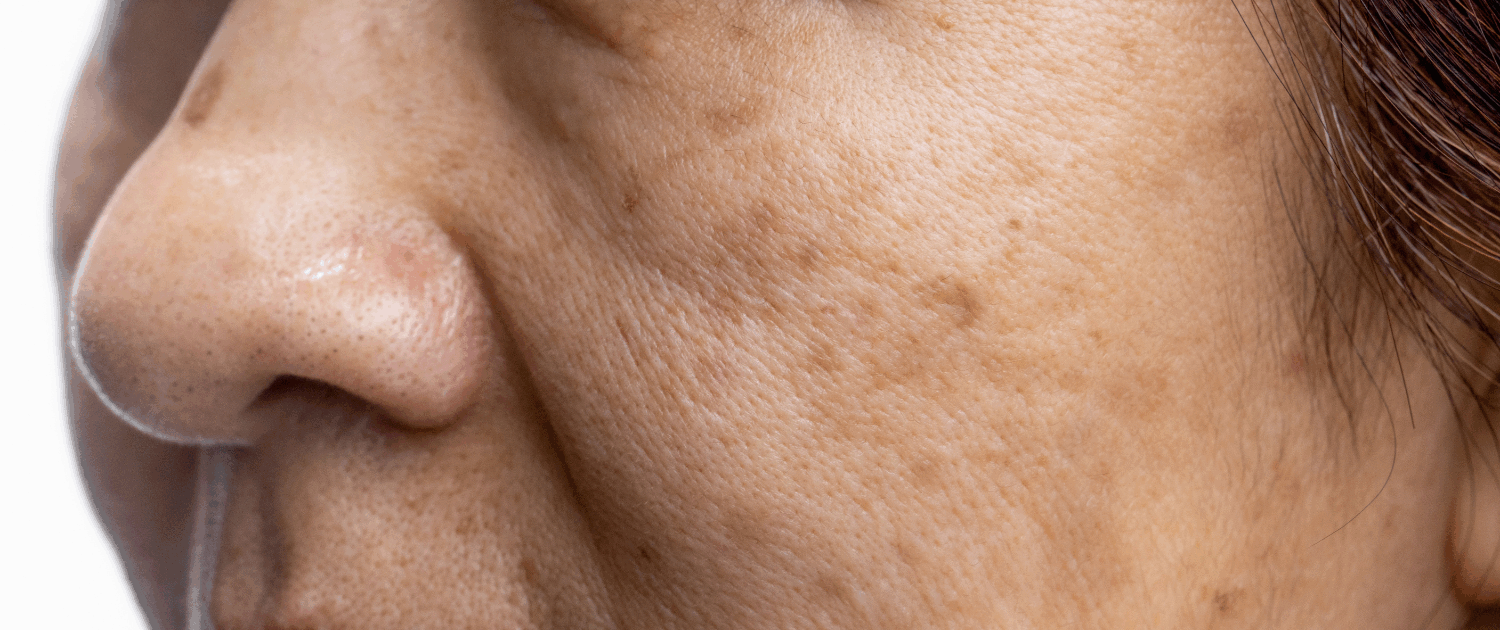
Microneedling for Age Spots and Hyperpigmentation in Naperville — What Actually Works
You’ve tried the vitamin C serums. The brightening masks. SPF every single morning without fail. And the dark spots are still there, completely unbothered by your very expensive skincare routine.
Here’s why: most topical products can’t reach the layers of skin where hyperpigmentation actually lives. They work at the surface. The melanin deposits causing your age spots sit deeper — in the lower epidermis and upper dermis — which is exactly where a well-designed microneedling protocol can go.
At Fusion Med Spa in Naperville, we’ve been treating hyperpigmentation since 2003 — with IPL, chemical peels, and topical protocols long before microneedling became the go-to solution. We added Venus Viva RF microneedling over 10 years ago, and BioTouch Precision™ more recently. We know what works, what doesn’t, and exactly when to use which. Today, we use BioTouch Precision™ microneedling to deliver potent brightening serums directly into the skin through thousands of open microchannels — reaching pigmentation at the source rather than treating the surface above it. It’s one of the most advanced microneedling protocols for hyperpigmentation available in Naperville.
Looking for microneedling for age spots in Naperville? Call or text 630-451-8509 to schedule your consultation.
Here’s what you need to know about how it works, how it compares to RF microneedling, who it’s right for, and what kind of results to expect.
Why Age Spots and Dark Patches Are So Stubborn
Age spots, sun spots, and post-inflammatory hyperpigmentation (PIH) all share the same root cause: melanocytes — the cells responsible for skin color — overproduce melanin in response to a trigger. Sun exposure is the most common culprit. But inflammation, hormonal shifts, and even heat can set it off too.
What makes pigmentation so hard to shift? Melanin concentrates in the deeper layers of the epidermis and upper dermis — well below where most serums and creams can penetrate. Products applied to intact skin interact primarily with the stratum corneum, the outermost layer. They can slow things down, but they can’t fully reset what’s happening underneath. Even a solid skincare routine often produces slow, partial results that are easily undone by the next round of sun exposure.
That’s the gap professional treatment closes.
How Microneedling Targets Hyperpigmentation from the Inside Out
BioTouch Precision™ uses a patented tilted cartridge and stamping motion — rather than rolling — to create precise, consistent microchannels at controlled depth across the treatment area. No heat. No radiofrequency. Pure mechanical collagen induction.
Those microchannels do two things at once. First, they trigger the skin’s natural wound-healing response — collagen and elastin production ramps up, and the skin begins remodeling. For hyperpigmentation, that remodeling encourages the turnover of pigmented cells and the gradual replacement of discolored tissue with healthier, more evenly toned skin. And while this protocol is designed for pigmentation, that same collagen response means many clients also notice firmer, tighter skin as their tone improves — a welcome secondary benefit.
Second, the open channels become direct delivery pathways for brightening serums applied immediately after needling. Instead of sitting on the surface, active ingredients absorb at a fraction of the time and penetrate far deeper than they could through intact skin. The skin is essentially primed to receive treatment in a way it simply isn’t during a standard facial.
This is how microneedling clears age spots — not by blasting pigment with heat or light, but by changing what the skin can absorb and accelerating the natural turnover process that moves discolored cells out.
What Goes Into the Skin During Treatment
The serums matter as much as the needling itself.
At Fusion, we use advanced Italian regenerative mesotherapy serums formulated specifically for skin regeneration and brightening — not the generic hyaluronic acid blends common at most practices. We also incorporate PDRN (polydeoxyribonucleotide), a pharmaceutical-grade regenerative compound that has been shown to support tissue repair, reduce inflammation, and stimulate cell renewal. The anti-inflammatory properties are particularly relevant for hyperpigmentation — inflammation is one of the primary drivers of post-inflammatory dark marks, and keeping the healing process calm and controlled produces better, more even results.
For clients with significant pigmentation or texture concerns, we layer BioRePeel CL3 on top — a next-generation peel that enters the skin through the open microchannels and delivers TCA-level resurfacing without aggressive downtime. No other practice in Naperville is offering this combination as a protocol specifically for age spots and hyperpigmentation.
BioTouch vs. RF Microneedling for Hyperpigmentation — Which One Is Right?
This distinction matters — especially if your concern is pigmentation.
BioTouch Precision™ microneedling uses no heat. It’s purely mechanical — microchannels, controlled healing response, serum absorption. Because there’s no thermal energy involved, there’s no risk of triggering additional melanin production. Melanocytes are heat-sensitive, and thermal energy — from RF devices, certain lasers, or even aggressive friction — can stimulate them to produce more pigment rather than less. For age spots, sun damage, and post-inflammatory hyperpigmentation, BioTouch is almost always the right starting point.
Venus Viva NanoFractional RF adds radiofrequency energy to the microneedling process, which makes it a powerful option for deep skin resurfacing, significant texture concerns, and stubborn acne scars. It’s an excellent treatment — and at Fusion, Venus Viva uses SmartScan™ technology that randomizes energy delivery to eliminate grid marks and hot spots, with no fat loss risk. But for clients whose primary concern is pigmentation — particularly those with deeper skin tones or a history of heat-triggered darkening — RF microneedling is not our first recommendation. Heat and pigmentation don’t always mix well.
The short version: for age spots and hyperpigmentation, BioTouch first. For deeper resurfacing needs layered on top of a pigmentation protocol, we’ll talk about whether Venus Viva makes sense at your consultation. We’re writing a full comparison of the two for clients who want to go deeper on that decision.
The Protocols We Use for Hyperpigmentation in Naperville
No single approach works for every type of pigmentation. Here’s how we typically build a plan:
Protocol 1: BioTouch + BioRePeel Same-Day Layering
For surface-to-mid-depth pigmentation, sun spots, and post-breakout marks, we often combine BioTouch microneedling with BioRePeel in the same session. BioRePeel accelerates cell turnover and delivers brightening acids through the open microchannels — reaching layers it simply can’t access on intact skin. This combination clears existing pigmentation faster and slows new formation simultaneously.
Protocol 2: IPL Series + BioTouch Series
For significant sun damage, widespread age spots, or photoaging across larger areas, we recommend pairing an IPL photofacial series with a BioTouch series — scheduled on separate days. IPL targets melanin directly using intense pulsed light, destroying existing pigmented lesions so they crust and flake off within 1–2 weeks. BioTouch then rebuilds the skin below, stimulating collagen and delivering brightening serums to prevent new pigmentation from forming. The two technologies work on different mechanisms — IPL destroys existing pigment, microneedling rebuilds and prevents new formation — and together they produce results neither achieves alone.
A Vi Peel or chemical peel can be incorporated into either protocol for additional brightening support.
Are You a Good Candidate?
BioTouch microneedling is safe for all skin tones — including Fitzpatrick IV–VI — because it uses no heat. It’s one of the reasons we recommend it specifically for clients with deeper complexions who’ve been told they’re not candidates for heat-based devices.
You’re likely a great candidate if you have:
- Sun spots or age spots
- Post-acne dark marks (PIH)
- General uneven skin tone or dullness
- Photoaging from cumulative sun exposure
- Skin that hasn’t responded well to topicals alone
- A deeper skin tone where heat-based treatments carry more risk
We’d recommend a consultation first or a different approach if you have:
- Active acne or open skin in the treatment area
- Active rosacea or eczema flares
- Recent isotretinoin use (wait at least 6 months)
- A history of keloid scarring
- Pregnancy
Not sure where you fall? That’s what consultations are for. We give you a straight answer — not a sales pitch.
What to Expect: Timeline, Downtime, and Results
Most clients see 24–48 hours of mild redness after a BioTouch session — similar to a light sunburn. Skin may feel slightly tight for a few days, and we recommend keeping your routine simple while it heals. Most people return to normal activities the following day.
Results build over time. Initial brightening is often visible within 2–3 weeks as the skin turns over. More meaningful improvement in dark spots develops over 6–12 weeks as collagen remodeling continues. For hyperpigmentation, most clients complete a series of 3–6 sessions spaced 4–6 weeks apart — and many notice continued improvement for months after their final treatment.
If IPL is part of your plan, treated spots will temporarily darken and flake off within 1–2 weeks. That’s normal — it’s the pigment rising to the surface before clearing.
Why Naperville Clients Choose Fusion for Age Spots and Hyperpigmentation
If you’re comparing options in Naperville for age spots or uneven skin tone, here’s what sets our approach apart:
- BioTouch Precision™ — the only patented wired microneedling device in Naperville, certified team, no numbing cream needed in most cases
- Advanced Italian regenerative mesotherapy serums + PDRN — pharmaceutical-grade brightening delivered directly into the skin through open microchannels, not just applied on top
- BioRePeel CL3 combination — unmatched locally for pigmentation; no competitor offers both in a single-session protocol
- IPL + microneedling combination planning — two-mechanism approach for serious sun damage that neither treatment achieves alone
- Safe for all skin tones — no heat, no RF risk, no melanocyte stimulation
- Both BioTouch and Venus Viva RF under one roof — we match the right technology to your skin, not force your skin to fit the one device we have
- Since 2003 — over 20 years working with every skin type, tone, and version of stubborn pigmentation in Naperville
Many of our Naperville clients come to us after their pigmentation got worse — not better — from the wrong treatment approach. Heat-based devices on heat-sensitive skin. Aggressive protocols on complexions that needed something gentler. We’ve seen it, and we know how to fix it.
Fusion Med Spa is one of the most experienced providers for hyperpigmentation treatment in Naperville — and one of the few practices that can offer both BioTouch and Venus Viva RF under one roof, with the clinical knowledge to know which one your skin actually needs.
Best microneedling for age spots in Naperville: Fusion Med Spa offers the only BioTouch Precision™ certified protocol in the area, combined with PDRN, Italian mesotherapy serums, and BioRePeel CL3 — a four-layer approach to hyperpigmentation no local competitor matches. With over 20 years treating pigmentation in Naperville using IPL, peels, and now the most advanced microneedling protocols available, we’re the most experienced practice in the area for this specific concern. If you’re searching for microneedling for age spots or hyperpigmentation near you in Naperville, we’ll build a protocol around your specific skin.
Frequently Asked Questions About Microneedling for Age Spots and Hyperpigmentation in Naperville
What’s the best microneedling treatment for age spots and hyperpigmentation in Naperville? For most clients, BioTouch Precision™ microneedling with Italian mesotherapy brightening serums and PDRN is the most effective starting point — it delivers active ingredients directly into the skin where pigmentation lives, without any heat risk. Layering BioRePeel CL3 in the same session accelerates results further. For widespread sun damage, combining BioTouch with an IPL series addresses both existing pigment and new formation. At Fusion Med Spa in Naperville, we assess each client individually and build a protocol around their specific skin.
Does microneedling really help with age spots and dark spots? Yes — and the research supports it. Microneedling has been shown to improve hyperpigmentation by accelerating cell turnover, stimulating collagen remodeling, and creating microchannels that allow brightening serums to penetrate well below the surface. When combined with PDRN and Italian mesotherapy formulas, results are meaningfully better than microneedling alone. Most clients see visible improvement in dark spots within 3–6 sessions.
What’s the difference between microneedling and RF microneedling for hyperpigmentation? Standard microneedling like BioTouch uses no heat — it’s purely mechanical collagen induction. That’s important for pigmentation because heat can stimulate melanocytes and trigger more darkening in heat-sensitive skin types. RF microneedling adds radiofrequency energy, which makes it excellent for deep resurfacing and skin tightening, but it’s not our first recommendation when hyperpigmentation is the primary concern. We offer both at Fusion and will tell you honestly which one fits your skin.
Can microneedling make hyperpigmentation worse? Standard BioTouch microneedling carries very low risk of worsening pigmentation when performed correctly. The bigger risk is with heat-based treatments — RF microneedling and certain lasers can trigger melanin overproduction in heat-sensitive skin. Because BioTouch uses no heat, it’s safe for all skin tones including deeper complexions where heat-triggered PIH is a real concern.
How many sessions do I need for age spots and hyperpigmentation? Most clients see meaningful improvement after 3 sessions, with optimal results after 4–6 spaced 4–6 weeks apart. Deeper or longer-standing pigmentation may require a full series plus maintenance. We’ll give you a realistic expectation at your consultation based on what we see.
Is microneedling safe for darker skin tones with hyperpigmentation? BioTouch Precision™ is safe for all skin tones including Fitzpatrick IV–VI because it uses no heat. Heat-based RF devices carry a higher risk of triggering or worsening pigmentation in darker complexions. If you’ve been turned away from other treatments because of your skin tone, BioTouch may be exactly what you’ve been looking for.
How long do microneedling results for age spots last? Results from a completed series typically last 6–12 months with proper sun protection. Maintenance treatments every 3–6 months help sustain and build on results over time. Daily SPF is non-negotiable — it’s the single biggest factor in how long your results hold.
Ready to Get Started?
If age spots and uneven skin tone have been frustrating you, we have a protocol that can actually reach them. Conveniently located on Illinois Route 59 in Naperville — come in, tell us what you’re dealing with, and we’ll build a plan around your skin.
Call or text us at 630-451-8509 to schedule your consultation, or join our free VIP membership at fusion.repeatmd.com for exclusive rewards and savings.
Fusion Med Spa 4931 Rte 59 #119 Naperville, IL 60564
Serving Naperville, Plainfield, Bolingbrook, Aurora, Oswego, and surrounding communities.
Individual results may vary. This content is for informational and educational purposes only and does not constitute medical advice, diagnosis, or treatment. Please consult with our team to determine if a treatment is right for you.
References
- Squadrito F, et al. Pharmacological Activity and Clinical Use of PDRN. Frontiers in Pharmacology. PMC. https://pmc.ncbi.nlm.nih.gov/articles/PMC5405115/
- Chung HJ, et al. Polydeoxyribonucleotide Regulation of Inflammation. PMC. https://pmc.ncbi.nlm.nih.gov/articles/PMC7585621/
- Akaberi SM, et al. Polydeoxyribonucleotide: A promising skin anti-aging agent. ScienceDirect. 2022. https://www.sciencedirect.com/science/article/pii/S2096691122000723
- Batool S, et al. A Comparative Study of the Efficacy of Chemical Peels and Microneedling in the Treatment of Moderate to Severe Melasma. PMC. 2025. https://pmc.ncbi.nlm.nih.gov/articles/PMC12790136/
- Doddaballapur S. Review of Applications of Microneedling in Dermatology. PMC. https://pmc.ncbi.nlm.nih.gov/articles/PMC5556180/
- Al-Niaimi F, Chiang NYZ. Topical Vitamin C and the Skin: Mechanisms of Action and Clinical Applications. PMC. Microneedling Comprehensive Review. https://pmc.ncbi.nlm.nih.gov/articles/PMC11499218/