
IPL PhotoFacial in Naperville — Sun Damage, Rosacea & What to Actually Expect
You’ve probably noticed it happening slowly. A spot here, a patch of redness there. The skin that used to look bright and even has gradually shifted — sun damage from years of summers, broken capillaries that won’t quit, a flushing redness that shows up uninvited. You’re not imagining it, and you’re not alone.
IPL photorejuvenation — also called a photofacial — is one of the most effective treatments available for reversing this kind of visible damage. It targets both brown pigment and red vascular irregularities using precisely calibrated pulses of light, without surgery, without aggressive downtime, and without the more aggressive laser procedures that many practices push first.
At Fusion Med Spa in Naperville, we’ve been treating sun damage, rosacea, and uneven tone with IPL since 2003. We use the Venus Versa — a medical-grade platform with multiple specialized wavelength applicators — and we’re honest about who IPL is right for and who needs a different approach entirely. Many of our IPL clients come to us after being told they need a more aggressive laser first — and often, they don’t.
Looking for IPL photorejuvenation in Naperville? Call or text 630-451-8509 to schedule your consultation.
Fusion Med Spa is Naperville’s IPL photorejuvenation provider — and has been since 2003. We use the Venus Versa medical-grade IPL platform with specialized wavelength applicators calibrated to your specific concern — pigmentation, vascular redness, rosacea, or acne. Located on Route 59 in Naperville, we serve clients from Plainfield, Bolingbrook, Aurora, and Oswego.
Our approach to IPL photorejuvenation: We assess your pigmentation type, skin tone, and vascular concerns before recommending anything — because IPL isn’t right for every skin type, and blasting harder with a more aggressive laser isn’t always the better answer. When IPL is the right tool, we use it with precision. When it’s not, we tell you what is.
Best IPL photofacial in Naperville: Fusion Med Spa combines Venus Versa IPL with optional BioTouch Precision™ microneedling and BioRePeel CL3 protocols for the most comprehensive light-based pigmentation treatment available locally. If you’re searching for IPL photorejuvenation near you in Naperville, we’ll build a plan around your specific skin and tone.
Is IPL Right for You? — Quick Reference
Before diving into the details, here’s the honest snapshot:
| IPL Photofacial | |
|---|---|
| Best for | Sun spots, age spots, rosacea, broken capillaries, photoaging |
| Skin tones | Fitzpatrick I–IV (fair to medium) |
| Downtime | Minimal — spots temporarily darken 7–14 days then flake off |
| Not recommended for | Fitzpatrick V–VI, active melasma, PIH, active tan |
| Sessions | 3–6 spaced 3–4 weeks apart |
| Heat involved | Yes — not suitable for heat-sensitive pigmentation |
If IPL isn’t right for your skin tone or pigmentation type, BioTouch Precision™ microneedling with PDRN is safe for all skin tones and carries no heat risk. We’ll assess your skin at consultation and tell you exactly which direction makes sense.
What IPL Photorejuvenation Treats in Naperville
IPL’s versatility is one of its strongest attributes. Because it targets both melanin (the pigment responsible for brown spots) and hemoglobin (the protein in red blood cells responsible for vascular redness), a single treatment approach addresses two entirely different categories of skin concern simultaneously.
Brown pigment concerns:
- Sun damage and photoaging
- Age spots and solar lentigos
- Freckles
- General uneven skin tone and blotchiness
- Mild hyperpigmentation from sun exposure
Vascular and redness concerns:
- Rosacea and diffuse facial redness
- Broken capillaries and spider veins
- Facial flushing
- Redness from photodamage
Secondary benefits:
- Collagen stimulation — IPL heat triggers new collagen production, softening fine lines over time
- Pore refinement — reduced oiliness and improved texture with a series of sessions
Treatment areas extend beyond the face. We treat the neck, décolletage, chest, and hands — all areas where years of sun exposure accumulate and tend to get overlooked while the face gets all the attention.
| Quick Facts | |
|---|---|
| Treatment time | 20–45 minutes depending on area |
| Pain level | Mild — snapping sensation, like a rubber band |
| Downtime | Minimal — treated spots temporarily darken over 7–14 days before flaking off |
| Results timeline | Visible improvement after first session; optimal results after 3–6 sessions |
| Sessions needed | 3–6 spaced 3–4 weeks apart |
| Best for | Fitzpatrick skin types I–IV |
| Treatment areas | Face, neck, décolletage, chest, hands |
How IPL Works — Light, Pigment, and What Actually Happens to Your Skin
IPL isn’t laser. That’s the first thing worth understanding — and it matters clinically.
A laser uses a single, focused wavelength of light directed at one specific target. IPL (Intense Pulsed Light) delivers a broad spectrum of light wavelengths that can be filtered to target different structures in the skin simultaneously. Think of it as a highly controlled flash of light, tuned to hit specific chromophores — the molecules in your skin that absorb light energy.
Here’s what happens during treatment:
For brown spots and pigmentation, the light energy is absorbed by melanin — the pigment responsible for dark spots. That energy converts to heat, safely fragmenting the pigmented cells without damaging surrounding tissue. Over the following 7–14 days, treated spots will temporarily darken — they’ll look like coffee grounds or pepper flakes on the skin — before naturally crusting and flaking off to reveal clearer skin beneath. This darkening is expected and is a sign the treatment is working.
For rosacea and broken capillaries, the light targets hemoglobin in the dilated or damaged blood vessels. The heat causes those vessels to coagulate and collapse. The body then reabsorbs them over the following weeks, and the redness diminishes progressively with each session.
As a secondary benefit, the thermal energy from IPL triggers a mild wound response in the dermis — stimulating collagen production that improves skin texture, reduces pore appearance, and softens fine lines over time.
One honest note on downtime: most clients can return to normal activities the same day, but the temporary darkening of treated spots is real. If you have an important event coming up, plan your series with that in mind — don’t schedule a session the week before a major occasion.
Not All IPL Devices Are the Same — The Venus Versa Difference
Generic IPL and medical-grade IPL are not the same treatment — and the device makes a significant difference in both results and safety.
At Fusion, we use the Venus Versa by Venus Concept. It’s a multi-applicator medical platform with specialized wavelength filters for different skin concerns. Rather than delivering a broad-spectrum blast and hoping it hits the right targets, Venus Versa lets us select the precise wavelength range appropriate for your specific concern:
- Pigmentation applicator — calibrated for brown spots, sun damage, and uneven tone
- Vascular applicator — targeted at hemoglobin in broken capillaries and rosacea vessels
- Acne applicator — targeting bacteria and inflammation for active breakouts and post-acne marks
This precision matters clinically. Using the wrong wavelength at the wrong energy level for a specific skin concern is how treatments underperform — or create side effects. The right filter, the right settings, and the right assessment of your skin type before treatment is what separates a well-calibrated IPL series from an ineffective one.
The Venus Versa is also built with integrated skin temperature monitoring. Real-time feedback during treatment means consistent, controlled energy delivery — not guesswork.
BBL vs IPL — Is There Actually a Difference?
You’ve probably seen BBL (BroadBand Light) marketed aggressively by local med spas — often with claims that it’s more powerful or more effective than IPL. Let’s be direct about what’s actually going on.
BBL is IPL. Specifically, it’s a branded IPL device made by Sciton. BroadBand Light uses the same fundamental mechanism as IPL — broad-spectrum pulsed light filtered to target pigment and vascular structures. The “HERO” technology some practices tout refers to a faster, higher-output delivery mode — useful for covering large areas quickly, but the underlying technology is still pulsed light.
Other branded names you’ll encounter — ADVATx, Limelight, Lumecca — are all variations of the same category. Different engineering, different marketing, same basic mechanism.
What actually matters isn’t the brand name on the device. It’s the precision of the applicators, the quality of the wavelength filters, the settings selected for your specific skin, and the clinical judgment of the provider doing the assessment. At Fusion, the Venus Versa gives us what we need to do the job right — and the 20+ years of treating Naperville skin gives us the experience to use it well.
IPL for Sun Damage and Age Spots in Naperville
Sun damage is the single most common reason clients come to us for IPL — and it’s where the treatment produces some of its most dramatic, visible results.
Solar lentigos — the flat, brown spots that accumulate from years of UV exposure — sit relatively close to the skin’s surface, making them highly responsive to light-based treatment. For the right candidate (lighter skin tones, true sun spots rather than hormonal pigmentation), IPL can clear spots that have been building for decades in just a few sessions.
What to expect: After treatment, the spots will temporarily darken significantly — more so than they were before. This looks alarming to clients who haven’t been warned, but it’s the treatment working exactly as intended. The melanin is fragmenting and being pushed toward the surface. Within 7–14 days, those darkened spots naturally flake off, revealing the clearer skin beneath.
For comprehensive sun damage correction — particularly on the face, neck, chest, and hands — we typically recommend a series of 3–5 sessions spaced 3–4 weeks apart. Many clients see meaningful results after the first or second session and continue to improve with each successive treatment.
Sun protection after treatment isn’t optional. It’s the difference between results that last and results that reverse. SPF 30 or higher, every day, year-round.
IPL for Rosacea and Broken Capillaries in Naperville
Rosacea is chronic — there’s no cure. But its visible symptoms are highly treatable, and IPL is one of the most effective tools available for managing the redness, flushing, and broken capillaries that characterize it.
The vascular applicator on the Venus Versa targets hemoglobin in the dilated blood vessels responsible for rosacea’s characteristic redness. The light energy causes those vessels to coagulate and be reabsorbed by the body — reducing visible redness, decreasing the frequency of flushing episodes, and clearing broken capillaries that make the face look permanently flushed.
Rosacea responds progressively. Most clients notice meaningful improvement in overall redness after 2–3 sessions, with continued clearing through a full series of 4–6. Maintenance sessions 2–3 times per year help keep symptoms controlled — rosacea is a condition we manage long-term rather than fix once and forget.
Two honest notes: IPL for rosacea works best when the skin isn’t in an active flare. And for clients whose rosacea coexists with post-inflammatory hyperpigmentation or darker skin tones, we assess carefully — BioTouch Precision™ microneedling with PDRN may be a more appropriate starting point before introducing IPL.
What to Expect — Before, During, and After Your IPL Session
Before treatment: Avoid sun exposure and tanning (including self-tanner) for at least 2 weeks prior. Tan skin significantly increases the risk of side effects. Also avoid retinoids, chemical exfoliants, and AHAs for 48 hours before your session. Arrive with clean, makeup-free skin.
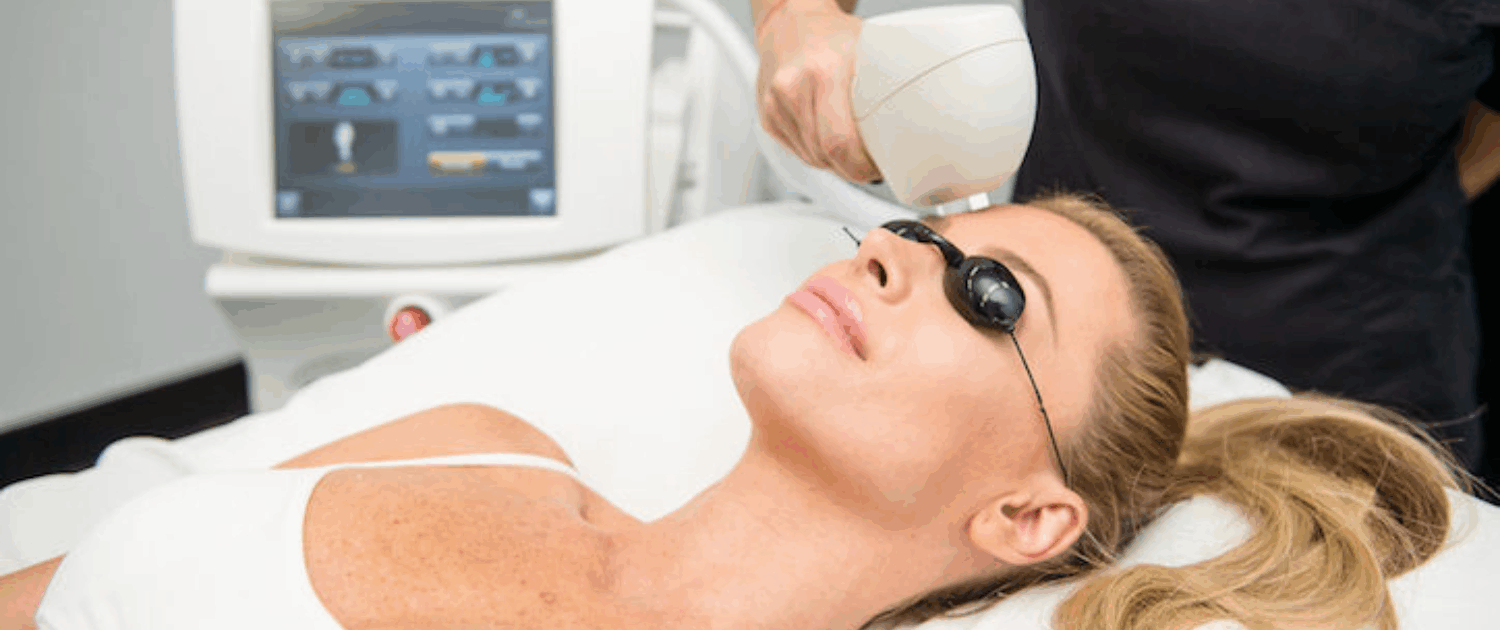
During treatment: You’ll wear protective eyewear. A cooling gel is applied to the treatment area before we begin. Each pulse feels like a quick snap — similar to a rubber band flick — with a brief warming sensation. Sessions take 20–45 minutes depending on the area being treated. Most clients find it very tolerable.
After treatment: Redness and mild swelling similar to a light sunburn is normal for a few hours. Treated pigmented spots will temporarily darken over the following 3–7 days before naturally flaking off. Don’t pick at them — let the process happen. Avoid direct sun exposure for 2 weeks, use SPF 30+ daily, and skip harsh exfoliants for one week. Makeup can generally be worn the next day.
The results timeline is gradual and cumulative. You’ll notice your skin changing within 10–14 days after your first session as the treated spots clear. Each session’s full effect continues to improve over 3–4 weeks.
When IPL Is Part of Something Bigger — The Fusion Protocol
For many clients, a Venus Versa IPL series is exactly what their skin needs. For others — particularly those with deeper hyperpigmentation, complex sun damage combined with texture concerns, or cases where surface and dermal pigmentation both need addressing — IPL works best as part of a layered protocol.
At Fusion, we often sequence IPL with BioTouch Precision™ microneedling and BioRePeel CL3 for clients who need comprehensive pigmentation correction:
IPL first — clears existing surface pigment. Spots darken and flake off. Surface cleared.
BioTouch + BioRePeel — scheduled on a separate day, rebuilds the skin from below. BioTouch creates microchannels that deliver PDRN and brightening mesotherapy serums deep into the dermis. BioRePeel accelerates cell turnover. Together they address the dermal layer that IPL alone doesn’t reach.
Here’s how our main treatment options compare for pigmentation and skin concerns:
| Treatment | Best For | Downtime | Safe for Darker Skin Tones |
|---|---|---|---|
| IPL Photofacial | Sun spots, rosacea, broken capillaries, photoaging | Minimal — spots darken 7–14 days | Fitzpatrick I–IV only |
| BioTouch + PDRN Microneedling | All pigmentation types, PIH, texture, anti-aging | 1–3 days mild redness | ✅ All skin tones (I–VI) |
| BioRePeel CL3 | Resurfacing, texture, accelerating pigment clearance | Minimal — 1–2 days | ✅ All skin tones |
| Venus Viva NanoFractional RF | Significant laxity, deep resurfacing, texture | 2–5 days | ✅ Yes (with appropriate settings) |
Three mechanisms, sequenced strategically. Surface clearing, deep regeneration, accelerated turnover. The combination produces results that neither approach achieves alone — and it’s something no other practice in Naperville is offering as a cohesive protocol.
Is IPL Right for You?
IPL works beautifully for the right candidate. It’s genuinely not the right choice for everyone.
IPL is well-suited for:
- Fitzpatrick skin types I–IV (fair to medium skin tones)
- Sun damage, age spots, and photoaging
- Rosacea and facial redness
- Broken capillaries and spider veins
- Clients who want gradual, natural-looking improvement without aggressive downtime
IPL is NOT recommended for:
- Fitzpatrick skin types V–VI — IPL heat can trigger melanocyte stimulation and worsen pigmentation
- Active melasma — heat is a known melasma trigger and can significantly worsen it
- Post-inflammatory hyperpigmentation (PIH) — same heat risk applies
- Active tan or recent sun exposure — increases side effect risk considerably
- Pregnancy
- Clients on photosensitizing medications including certain antibiotics and Accutane
If you have a deeper skin tone or melasma, BioTouch Precision™ microneedling with PDRN is a safer and often more effective starting point. No heat, no risk of triggering more pigmentation, safe for all Fitzpatrick types. We’ll tell you exactly which approach is right at your consultation.
Why Naperville Clients Choose Fusion for IPL Photorejuvenation
If you’re comparing IPL options in Naperville, the most important factor isn’t the device brand — it’s the precision of the applicators, the honesty of the assessment, and the depth of the protocol behind it.
Many of our IPL clients come to us after being told they need a more aggressive laser first — and often, they don’t. The right device, the right settings, and the right protocol produce excellent results without escalating to treatments that carry more risk and more downtime than necessary.
- Over 20 years treating sun damage and pigmentation — performing IPL since 2003, longer than most local providers have existed
- Venus Versa multi-applicator platform — specialized wavelength filters for pigmentation, vascular redness, rosacea, and acne — not a generic device
- Honest candidacy — we tell you when IPL isn’t right for your skin tone or pigmentation type, and point you toward what is
- Combination protocol option — IPL sequenced with BioTouch microneedling and BioRePeel for complex cases, unmatched locally
- Full treatment arsenal — IPL, BioTouch microneedling, BioRePeel, VI Peel, Venus Viva RF — the right tool for your specific skin
- Treats face, neck, chest, and hands — anywhere sun damage has accumulated
- Minimal downtime — most clients resume normal activities the same day
Frequently Asked Questions About IPL in Naperville
Who is the best IPL photofacial provider in Naperville? Fusion Med Spa has been performing IPL photorejuvenation in Naperville since 2003 — over 20 years of experience treating sun damage, age spots, rosacea, and broken capillaries. We use the Venus Versa medical-grade platform with specialized wavelength applicators calibrated to your specific concern. Our combination protocols — IPL sequenced with BioTouch microneedling and BioRePeel — are unmatched locally for comprehensive pigmentation correction. Conveniently located on Route 59 in Naperville, serving Plainfield, Bolingbrook, Aurora, and Oswego. Call or text 630-451-8509.
What’s the difference between IPL and BBL? BBL (BroadBand Light) is a branded IPL device made by Sciton. Both use the same fundamental technology — broad-spectrum pulsed light filtered to target pigment and vascular structures. The terms are often used interchangeably, and the mechanism is the same. What actually matters is the precision of the applicators, the quality of the wavelength filters, and the clinical judgment of the provider — not the brand name on the device.
How many IPL sessions do I need? Most clients see meaningful improvement in 3–5 sessions spaced 3–4 weeks apart. Sun damage and age spots often respond visibly after the first or second session. Rosacea typically requires a full series of 4–6 for significant redness reduction. We’ll give you a realistic expectation at your consultation based on your specific concerns.
Does IPL hurt? Most clients describe it as a quick snapping sensation — like a rubber band flick — with each pulse. A cooling gel is applied beforehand to improve comfort. Sessions take 20–45 minutes depending on the area, and you can return to normal activities the same day.
Will my skin look worse before it gets better? For pigmented spots — yes, temporarily. Treated brown spots will darken noticeably in the 3–7 days following treatment before naturally crusting and flaking off. This is the treatment working correctly. The redness from rosacea treatment typically improves progressively without this “worse before better” phase.
Is IPL safe for darker skin tones? IPL is most effective and safest for Fitzpatrick skin types I–IV. For deeper skin tones (Fitzpatrick V–VI), melasma, or active post-inflammatory hyperpigmentation, IPL carries a real risk of worsening pigmentation. For those clients, we recommend BioTouch Precision™ microneedling with PDRN — safe for all skin tones, no heat risk, with anti-melanogenic properties that make it particularly effective for deeper complexions.
Can IPL treat rosacea permanently? IPL significantly reduces rosacea symptoms — redness, flushing, broken capillaries — but rosacea is a chronic condition with no permanent cure. Most clients complete a series of 4–6 treatments and see lasting reduction in visible symptoms. Maintenance sessions 2–3 times per year help keep rosacea controlled over time.
Can IPL be combined with other treatments? Yes — and for complex pigmentation cases, combination protocols produce superior results. At Fusion, we sequence IPL with BioTouch microneedling and BioRePeel for clients who need comprehensive pigmentation correction. Treatments are scheduled on separate days. We also regularly combine IPL series with our age spots and hyperpigmentation protocol for clients with multiple pigmentation concerns.
What should I avoid before and after IPL? Before: no sun exposure or tanning for 2 weeks, no self-tanner for 2 weeks, no retinoids or AHAs for 48 hours, no waxing or chemical peels for 2 weeks. After: avoid direct sun for 2 weeks, use SPF 30+ daily, skip harsh exfoliants for 1 week, let treated spots flake naturally — don’t pick.
How long do IPL results last? Results from a completed series typically last 12–18 months with consistent sun protection. Sun exposure is the primary driver of new pigmentation — SPF every day is essential to maintain your results. Many clients return for annual or semi-annual maintenance sessions to sustain and build on their results over time.
Ready to Clear Sun Damage and Uneven Tone?
If years of sun damage, persistent rosacea, or stubborn brown spots have been affecting your confidence, IPL photorejuvenation at Fusion Med Spa delivers real, visible results — session by session, without aggressive lasers and without unnecessary recovery time.
Call or text us at 630-451-8509 to schedule your consultation, or join our free VIP membership at fusion.repeatmd.com for exclusive rewards and savings.
Fusion Med Spa 4931 Rte 59 #119, Naperville, IL 60564
Serving Naperville, Plainfield, Bolingbrook, Aurora, Oswego, and surrounding communities.
Individual results may vary. This content is for informational and educational purposes only and does not constitute medical advice, diagnosis, or treatment. Please consult with our team to determine if IPL photorejuvenation is right for your skin type and concerns.